The Secret Dangers of Burnt Cables
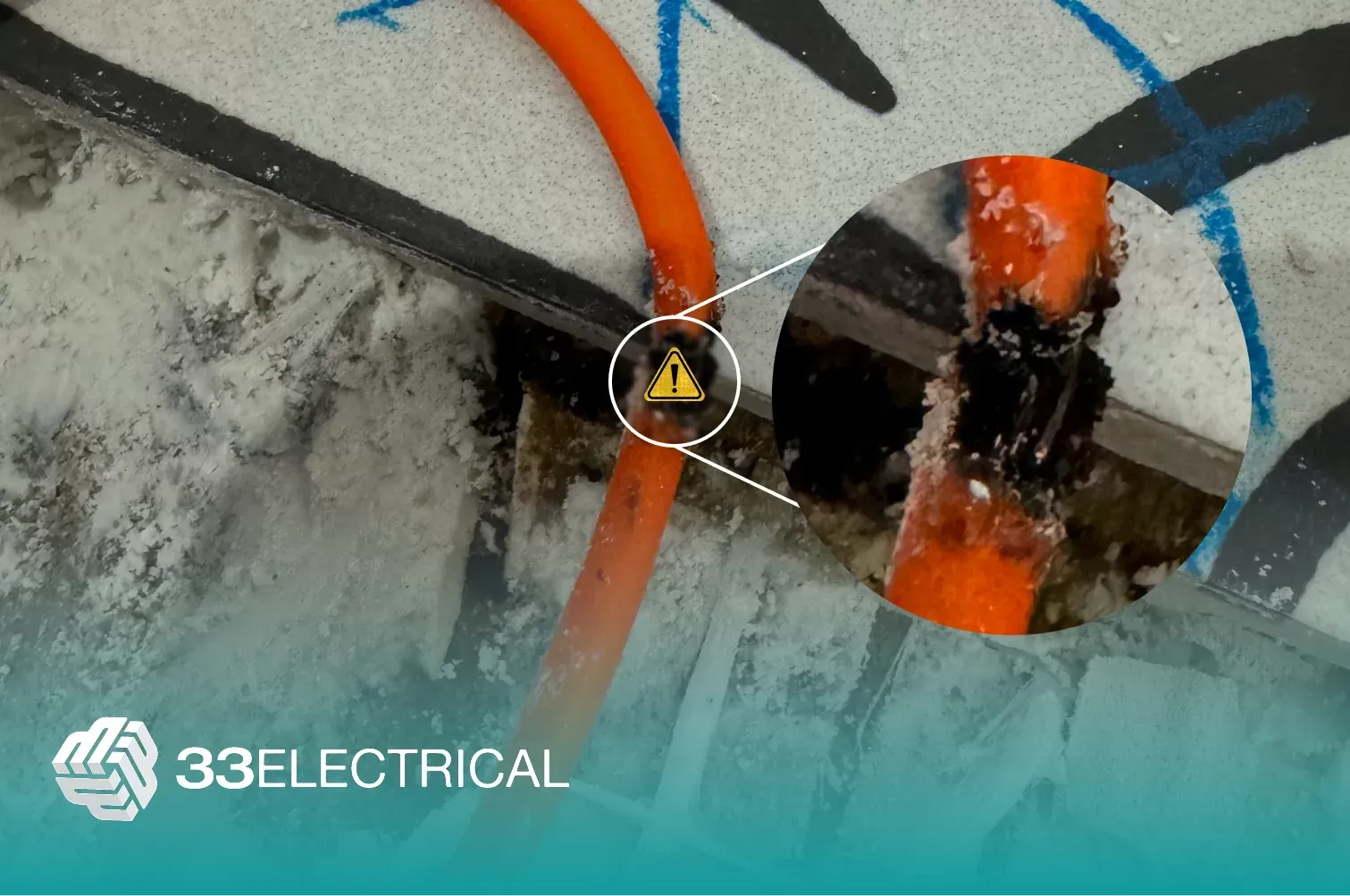
Have you ever noticed a faint burning smell near a power outlet or behind an appliance? Or spotted dark, discoloured marks on cables or sockets?
Those aren’t just cosmetic issues, they’re warning signs of a serious electrical hazard.
Burnt cables are one of the most common causes of electrical fires in Australian homes, and yet they often go unnoticed until it’s too late. Let’s uncover what’s happening behind the scenes, and why you should never ignore the signs.
1. What Causes Burnt Electrical Cables?
Burnt or melted cables happen when wiring gets too hot for too long. This can be caused by:
- Overloaded circuits – Too many appliances pulling power from one circuit.
- Loose connections – Poorly fitted wires or terminals create resistance, generating heat.
- Damaged insulation – Cracked or worn cable coverings allow heat and arcing.
- Faulty wiring – Old or incorrectly installed wiring can’t handle modern loads.
- High-resistance joints – Corrosion, moisture, or vibration can loosen joints, increasing resistance.
Each of these issues can make cables smoulder inside walls or behind appliances, a hidden fire risk waiting to happen.
2. Why Burnt Cables Are So Dangerous
Even a small burnt section of wire can spell big trouble. Here’s why:
- Fire risk – Overheating can ignite insulation or surrounding materials.
- Electric shock hazard – Exposed wires increase the risk of shock or electrocution.
- Appliance damage – Burnt cables can send irregular voltage that short-circuits or destroys connected devices.
- Progressive damage – Once a section burns, heat spreads along the wiring, degrading it further over time.
The worst part? Many burnt cable issues start inside the wall cavity, where you can’t see them, only smell them.
3. Warning Signs You Should Never Ignore
If you notice any of these, turn off power immediately and call a licensed electrician:
- Burning or melting plastic smell
- Warm or discoloured power outlets
- Crackling or buzzing noises from switches or sockets
- Lights flickering when appliances run
- Circuit breakers that trip frequently
- Visible scorch marks around plugs or cords
Even a faint smell of burning should be treated seriously, it often means a wire is overheating right now.
4. What to Do If You Suspect Burnt Wiring
Step 1: Turn off power at the main switchboard.
Step 2: Unplug any appliances from the affected outlet or area.
Step 3: Do not attempt to repair or cut wires yourself, it’s illegal and dangerous in Australia.
Step 4: Call a licensed electrician immediately for inspection and thermal testing.
An experienced electrician can locate hot spots using infrared or continuity testing and replace burnt sections safely.
5. How to Prevent Burnt Cables in the Future
Preventative maintenance is the key to avoiding future issues:
- Schedule regular electrical inspections (every 3–5 years for homes, annually for businesses).
- Avoid overloading outlets, spread high-draw devices (like heaters and aircons) across circuits.
- Upgrade old wiring to handle modern energy loads.
- Replace damaged cords on appliances immediately.
- Install safety switches and surge protection to cut power during faults.
6. Burnt Cables Are a Symptom, Not the Cause
It’s important to remember that burnt cables are usually the result of another issue, such as poor connections or overloading. Simply replacing the cable won’t fix the root cause.
A professional inspection from a licensed Newcastle electrician ensures your home or business wiring is safe, compliant, and efficient.
Burnt cables are silent warning signs that something is seriously wrong in your electrical system.
Even if the issue seems minor, one small burnt wire could lead to a house fire.
If you smell something burning, see discolouration, or suspect damaged wiring, don’t take risks, call 33 Electrical today.
Our experienced electricians will identify the problem, repair it safely, and help protect your home or workplace from electrical hazards.
You might also like